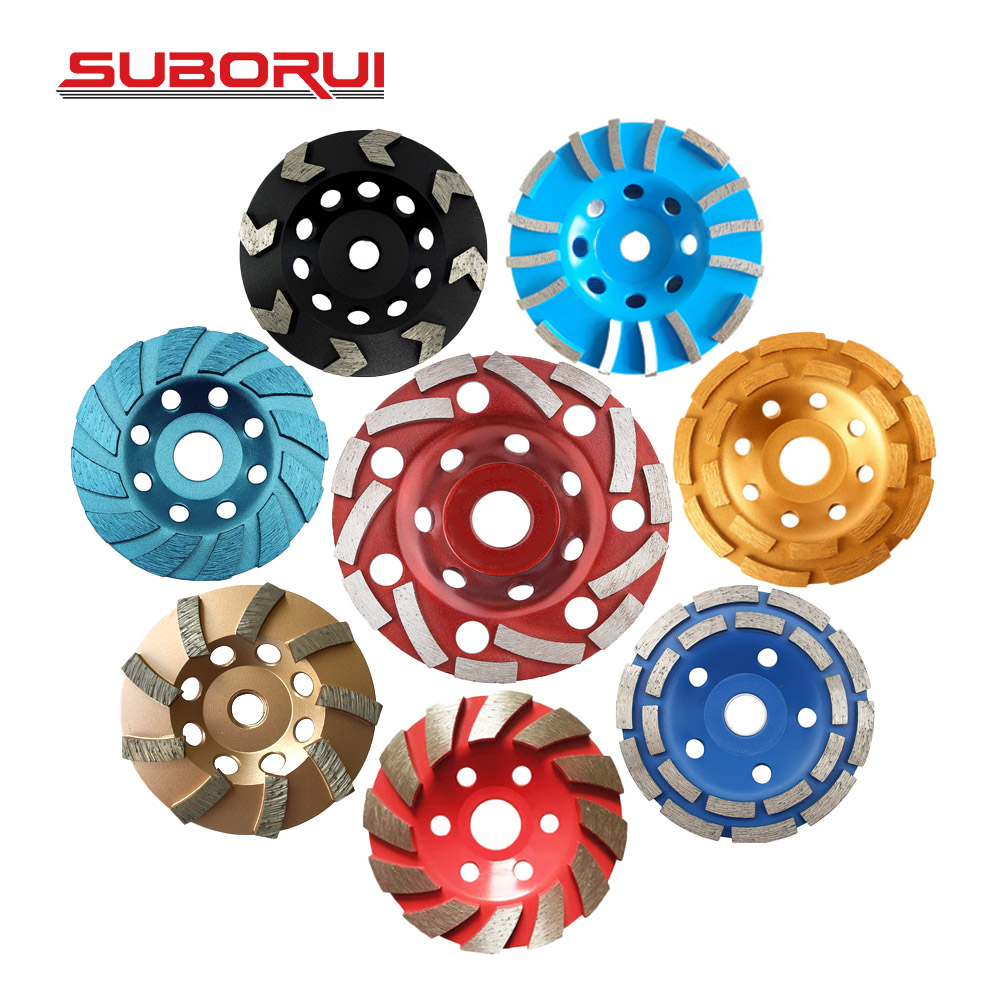
Diamond SegmentedMasonry & Granite
Engineered for endurance in heavy metal fabrication, ductile cast iron slitting, concrete core masonry, and stainless-steel processing. Review our core catalog lines below or request custom OEM production batches.
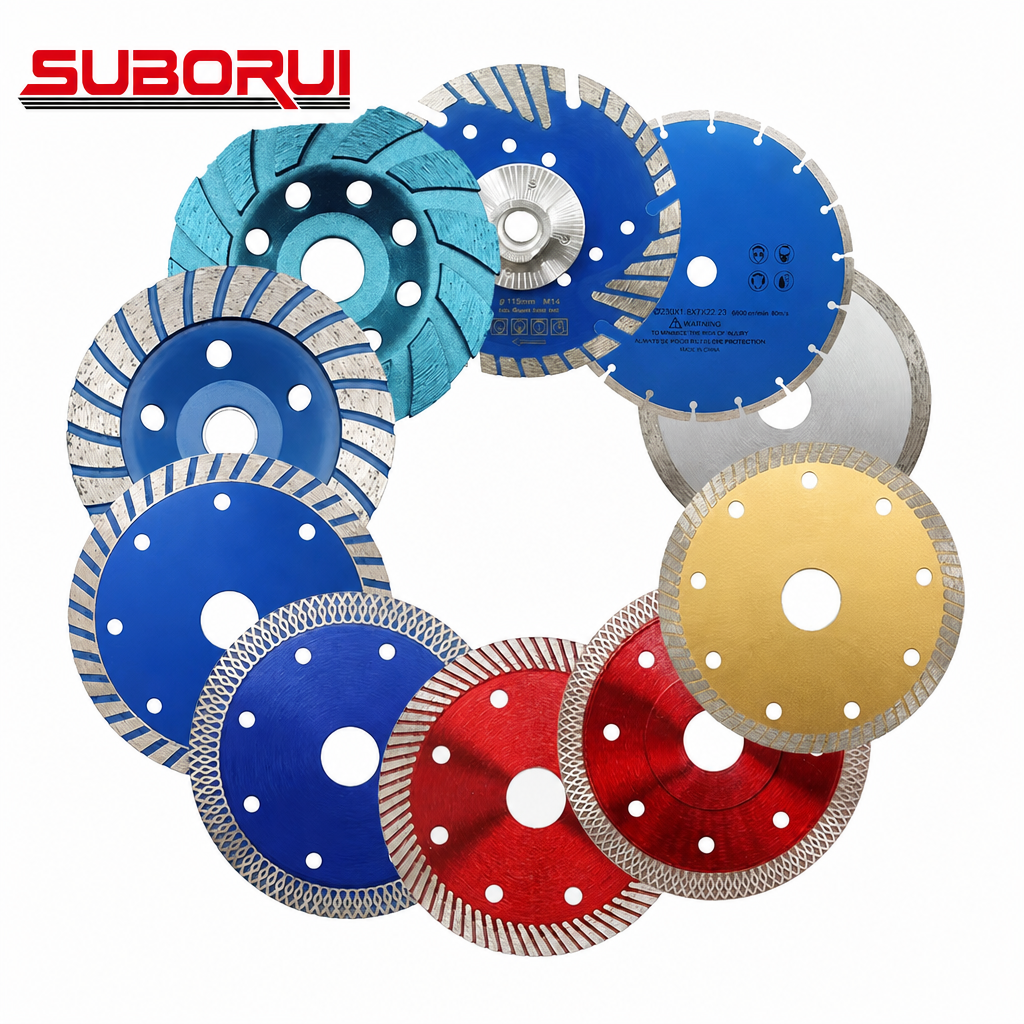
The Metropolitan City of Turin represents Italy’s engineering capital, balancing historical automotive excellence with advanced aerospace, rail transit, and automated structural engineering. Our bonded cutoff wheels are custom-formulated to address the strict metallurgical demands of Piedmont’s industrial ecosystem.
Turin remains the historical heart of Italian car making, centering on Mirafiori, Rivalta, and Grugliasco. Cutoff operations demand burn-free, ultra-narrow slitting of high-strength structural steels (AHSS), chassis tubular members, hydroformed exhaust piping, and case-hardened alloy transmission shafts without inducing thermal micro-cracks or heat discoloration.
Home to the Piedmont Aerospace Cluster including Leonardo and Avio Aero facilities, this corridor demands non-contaminating INOX-grade cutting wheels. Formulations are certified free of iron, sulfur, and chlorine (Fe + S + Cl < 0.1%) to completely eliminate galvanic corrosion during the sectioning of Inconel 718, titanium Grade 5, and specialized stainless flight brackets.
Alstom and associated Piedmont heavy transit suppliers perform rigorous cutting of heavy carbon-steel track sections, manganese rails, bogie assemblies, and passenger carriage structural frames. Our high-tensile 355mm to 400mm chop saw wheels deliver rapid perpendicularity under high downforce without wheel deflection.
Turin’s mechatronics cluster builds industrial robotic arms, high-speed pick-and-place lines, and pneumatic actuators. Cutoff operations require consistent 1.0mm to 1.6mm thin kerfs on extruded structural aluminum alloys, chrome-plated linear guide rails, and precision planetary gear housings without dimensional burrs.
General structural fabricators processing I-beams, wide-flange girders, hollow structural sections (HSS), and heavy plate require reinforced 230mm angle grinder wheels with dual-layer fiberglass reinforcement to resist extreme lateral pressure and side-loading forces common in manual beveling and weld seam preparation.
Sheet metal enclosures, stainless food-processing containers, and industrial heat exchangers require low-vibration slitting to protect operators from hand-arm vibration syndrome (HAVS) during long shifts, while ensuring clean edges for automated laser and TIG orbital welding lines.
Abrasive cutoff wheels are precision kinetic instruments operating at peripheral surface speeds up to 80 meters per second. Engineering reliable slitting discs requires rigorous balancing of abrasive friability, thermosetting resin matrix chemistry, and tensile fiberglass matrix placement.
In high-speed cutting disc operations, metal removal does not occur through simple shearing as seen with carbide or HSS toothed blades. Instead, abrasive cutting is a micro-fracturing process. Millions of crystalline abrasive grains embedded within a phenolic binder engage the workpiece at rotational speeds typically exceeding 12,200 RPM on standard 115mm angle grinders. Each grain generates intense local friction, elevating interfacial temperatures to over 1,000°C in microseconds. Effective performance relies on micro-crystalline self-sharpening: as the outer facet of a grain dulls, the cutting resistance increases, cleanly fracturing the crystal along engineered cleavage planes to present fresh, sharp cutting edges rather than glazing over the cut surface.
To overcome thermal degradation, our formulation chemistry incorporates specialized active cooling fillers—specifically potassium fluoroborate (KBF4) and synthetic cryolite. Under intense cutting friction, these compounds melt endothermically directly at the contact zone. This micro-cooling effect depresses interfacial oxidation, preventing weld buildup on the disc periphery and dramatically increasing tool life across heat-resistant alloys common in Turin’s mechanical workshops.
| Grain Matrix System | Hardness (Mohs / Knoop) | Primary Industrial Substrates | Kinetic Friability Profile | Optimal Peripheral Speed |
|---|---|---|---|---|
| Fused Brown Aluminum Oxide (A) | 9.0 Mohs / 2,050 Knoop | Low-carbon mild steel, structural rebar, wrought iron | Medium friability; durable bulk crystal geometry | 70 – 80 m/s |
| Monocrystalline / White Alumina (WA) | 9.2 Mohs / 2,150 Knoop | Austenitic stainless steels (AISI 304, 316L, Duplex) | High friability; cool-cutting micro-fracturing facets | 80 m/s (Fe + S + Cl < 0.1%) |
| Zirconia Alumina (ZA) Matrix | 9.3 Mohs / 2,300 Knoop | High-tensile alloy steels, heavy foundry risers, rail track | Low friability; micro-fractures under extreme pressure | 80 – 100 m/s (Heavy load) |
| Ceramic Seeded Gel (SG / Cubitron-type) | 9.5 Mohs / 2,700 Knoop | Titanium alloys, Inconel, hard nickel superalloys | Ultra-controlled nano-cleavage; permanent sharp edge | 80 m/s (High-duty automated) |
| Silicon Carbide (C) | 9.4 Mohs / 2,480 Knoop | Cast iron, non-ferrous bronze, stone, masonry | Extremely sharp, high brittleness; fast grain renewal | 70 – 80 m/s |
Our discs utilize an advanced thermosetting cross-linked phenolic resin matrix, modified with synthetic elastomers. This elastomeric modification absorbs catastrophic mechanical shocks caused by workpiece pinching or sudden angle changes in manual grinding operations. Discs are molded under 2,000-ton hydraulic presses in cleanrooms maintaining constant temperature and humidity (<45% RH) to avoid hydrolytic blistering during the curing phase.
The curing phase follows an electronically monitored 36-hour ramp-and-soak thermal profile peaking at 180°C. This creates total polymeric polymerization. For critical structural safety, wheels feature high-tensile, alkali-resistant (AR-glass) woven fiberglass mesh reinforcement. Standard cutoff discs (1.0mm–1.6mm) utilize dual exterior webs (2-ply), while heavy slitting and foundry snaggers incorporate 3-ply internal lattices capable of passing the severe burst test requirements stipulated by the Federation of European Producers of Abrasives (oSa) and standard EN 12413.
Every batch produced in our plant undergoes destruct-to-burst centrifugal acceleration testing. Discs must exceed 1.5 times the maximum rated RPM before disc rupture is permitted, ensuring absolute user safety on manual pneumatic and electric grinders.
Using computerized optical balancing stations, we hold disc lateral deflection and unbalance within 0.15 g·cm. This eliminates high-frequency chatter marks on the cut metal face and shields machine bearings from premature failure.
Phenolic resins undergo gradual moisture degradation if stored in damp conditions. Our export shipments to European coastal and riverine hubs are packaged in hermetically sealed aluminum canisters and desiccated multi-layer shrink-wrap packs.
The manufacturing fabric of northern Italy is shifting rapidly under the dual pressures of European decarbonization targets, robotic automation, and tighter operator health directives. Sourcing strategies for consumable abrasives must keep pace with these shop-floor transformations.
With high electricity tariffs affecting Italian metal processors, shops are transitioning away from traditional 2.5mm and 3.0mm discs toward ultra-thin 0.8mm to 1.0mm slitting geometries. Thinner wheels require 45% less motor torque, saving substantial energy across thousands of daily cuts while drastically cutting material swarf loss on expensive stainless and titanium alloys.
Piedmontese machine shops are installing six-axis industrial articulated arms for automated casting riser cut-off and laser-weld deburring. Automated slitting demands discs with consistent radial wear rates and zero core wobble, permitting automated tool-wear compensation software to function without human intervention.
Stricter Italian workplace regulations (D.Lgs. 81/08 regarding health and safety in working environments) are pushing procurement directors in Turin to demand abrasive products formulated with low formaldehyde phenol-resins and low particulate emission profiles to improve respiratory safety in enclosed fabrication facilities.
Jiangsu WRD Tools Co., Ltd. (established in March 2007) is an Intertek-audited cutting and grinding tool manufacturing enterprise located in Danyang, Jiangsu, China. Operating across 12,000 m² of specialized workshops with over 150 skilled technicians, we bridge cost-efficiency with rigorous international quality standards.
Our complete plant infrastructure, employee labor compliance, environmental filtration, and automated QA/QC testing regimens have been verified on-site by Intertek Group. European procurement teams can onboard our facilities with complete vendor compliance documentation.
Over nearly two decades, we have engineered and manufactured cutting and hole-making tools for globally respected brands including BOSCH, Milwaukee, DeWalt, Makita, Irwin, Dexter, Wolfcraft, and Truper. Our private-label operations meet exacting multinational tolerances.
Unlike trading entities, we maintain total control from raw abrasive grain calcination and screen sieving to automated hydraulic compaction, atmospheric tunnel baking, laser marking, and robotic shrink packaging. This integration ensures absolute carton-to-carton uniformity.
Clear, direct technical answers addressing customs classification, logistics corridors into Piedmont, testing certifications, and custom branding for Italian distributors and plant managers.
Whether you require full-container distributor shipments, private-label OEM abrasive programs, or custom-engineered cutoff wheel formulations tailored for specific metallurgy in Turin, our technical engineers respond within 24 hours.