Recommended Industrial Threading & Holemaking Tools
Engineered to rigid DIN and ISO dimensional tolerances, our rotary cutters, threading taps, and structural hole saws deliver repeatable concentricity and extended tool life across metals, composites, and masonry.
The Physics of Helical Thread Milling vs. Traditional Tapping
Why Tier-1 automotive, aerospace, and precision engineering enterprises are systematically transitioning critical internal threading lines to helical interpolation milling cutters.
In high-throughput CNC manufacturing, the production of precision internal and external screw threads represents one of the most mechanically vulnerable stages of the metal removal cycle. Historically, rotational tapping using DIN 352 or DIN 371/376 taps has dominated mass production due to legacy machine setups and low initial capital investment. However, as alloy compositions advance toward high-strength nickel superalloys (Inconel 718), titanium alloys (Ti-6Al-4V), and quenched and tempered structural steels up to HRC 65, conventional tapping exhibits steep operational liabilities.
Traditional taps maintain 100% surface engagement along their active cutting teeth. When machining deep blind holes or work-hardening austenitic steels, rotational friction produces localized thermal spikes exceeding 850°C. If chip evacuation clogs within straight or spiral flutes, the tap undergoes abrupt torsional over-torque, causing subterranean tool catastrophic rupture. Extracting a fractured tap from an intricately machined engine casing or aerospace turbine disk frequently results in irreversible workpiece scrappage or expensive EDM salvage procedures.
Kinematic Advantage: 3-Axis Helical Interpolation
Thread milling cutters utilize simultaneous 3-axis CNC helical interpolation (simultaneous circular X-Y motion with a single Z-axis pitch feed per 360° revolution). The cutter diameter is significantly smaller than the minor hole diameter, providing an open peripheral void that permits unconstrained chip evacuation and uninterrupted coolant wash directly to the cutting zone.
Because contact is intermittent and localized to tangential cutting arcs, mechanical cutting forces are reduced by up to 68% compared to single-pass tapping. If tool degradation occurs, the cutter simply wears down without seizing; in the rare event of tool breakage, the smaller-diameter thread mill can be retracted without harming the internal thread profile or parent component.
| Performance Characteristic | Solid Carbide Thread Mill | HSS-E / M35 Machine Tap | Engineering Impact |
|---|---|---|---|
| Cutting Kinematics | Simultaneous 3-axis helical interpolation | Direct 1-axis synchronized rotational feed | Milling distributes thermal load across intermittent radial passes |
| Tool Breakage Risk | Negligible Workpiece Loss | Critical Seizure & Rupture | Broken thread mills drop out easily; seized taps scrap expensive parts |
| Pitch Diameter Adjustability | Full CNC Offset Control | Fixed (Non-adjustable) | Thread mills adjust 6H, 4H, or 2B pitch fit via CNC tool offset adjustments |
| Chip Evacuation Profile | Short, comminuted, discontinuous chips | Long, continuous, binding stringers | Eliminates flute packing in blind-hole and deep-thread applications |
| Material Hardness Threshold | Up to HRC 65 (Hardened Steels & Superalloys) | Economically limited to ≤ HRC 38 | Milling enables threading after heat treatment, avoiding heat distortion |
| Blind Hole Clearance | Cuts complete thread depth to bottom pitch | Requires 1.5–3.5 pitches chamfer clearance | Maximizes thread engagement depth in compact housing designs |
Enterprise Strengths & Global OEM/ODM Capability
Headquartered in Danyang, Jiangsu—the premier epicenter of China's cutting tool industrial cluster—Jiangsu WRD Tools Co., Ltd. combines nearly two decades of precision metallurgy with large-scale automated manufacturing.
Intertek Onsite-Verified Facility
Our 12,000 m² modern manufacturing plant and quality assurance systems have undergone thorough onsite audit and verification by Intertek Group plc. Sourcing teams receive transparent documentation covering ISO compliance, machine maintenance logs, and raw material mill certificates.
Massive Capacity: 90M Units/Year
Equipped with specialized workshops for CNC flute grinding, automated salt-bath and vacuum heat treatment, and precision coating lines, our 150+ skilled technicians output over 50M wood tools, 25M twist drill bits, and millions of specialized rotary cutters annually with dependable cycle times.
Tier-1 Global Brand Heritage
WRD Tools supplies and manufactures precision accessories for international retail and industrial power tool giants across 20+ countries, including Germany, the United States, Switzerland, and Sweden. We fulfill OEM/ODM specifications trusted alongside brands such as Bosch, Milwaukee, DeWalt, and Makita.
Emerging Procurement Trends in Industrial Thread Milling
How global supply chain directors, contract manufacturing executives, and tool room managers are reshaping procurement criteria to safeguard uptime and mitigate volatile input costs.
Sub-Micron Tungsten Consolidation
Procurement teams are moving away from mixed recycled grades toward verified virgin 0.4–0.6 µm sub-micron tungsten carbide grains. The finer microstructure delivers balanced fracture toughness and wear resistance, maintaining edge integrity across uninterrupted aerospace machining batches.
Multi-Layer Nanocomposite Coatings
Standard TiN and TiCN coatings are rapidly being replaced by AlCrN (Aluminum Chromium Nitride) and multi-layered nano-composite AlTiN architectures. These PVD coatings provide thermal barriers exceeding 1,100°C, enabling dry and near-dry MQL (Minimum Quantity Lubrication) threading.
Multi-Function Thriller Tools
Combined drill-and-thread-mill cutters ("Thriller" or drill-thread-chamfer combination tools) are seeing 35% compound annual procurement growth in automotive lines. By executing core drilling, hole chamfering, and thread milling in a unified toolpath, tool change cycle times drop significantly.
Supply Chain Regionalization & Direct OEM
Global distributors are bypassing intermediary export brokers to establish direct supply agreements with certified factory originators. Direct engagement with Danyang manufacturers provides end-to-end control over custom substrate specifications, laser etchings, and tailored packaging.
Technological Frontiers in CNC Thread Milling Systems
Continuous advances in 5-axis tool grinding, micro-grain metallurgy, and algorithmic CAM toolpath compensation are pushing modern rotary thread mills beyond previous operating envelopes.
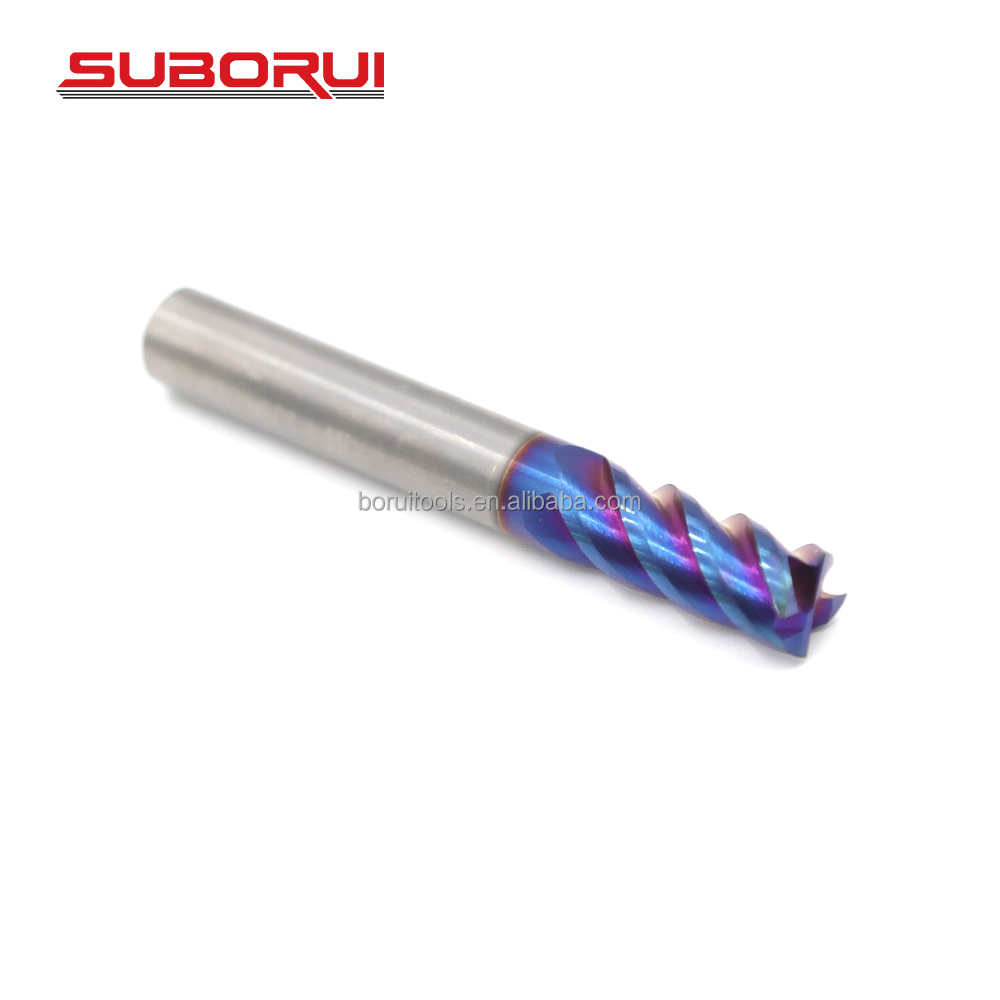
The progression of modern thread milling is tied directly to developments in multi-axis CNC software and grinding precision. Historic thread milling cutters relied on straight flute geometries with neutral rake profiles, which caused high vibration and surface chatter when cutting internal threads exceeding 2.5×D depth-to-diameter ratios. Modern high-performance cutters utilize variable helix flute angles (typically varying between 15° and 30°) and differential tooth pitch indexing. This uneven flute geometry interrupts harmonic resonance frequencies during helical entry, enabling mirror-smooth thread root finishes even in deep aerospace bores.
Simultaneously, micro-thread milling has emerged as a critical technology for medical devices, orthopedic bone screws, and precision instrumentation. Thread mills with pitch sizes as small as M0.8 × 0.2 and M1.2 are ground on ultra-precision 6-axis grinding machines equipped with optical in-process laser profilometers. By maintaining tooth profile accuracy within ±0.003 mm, these miniature solid carbide cutters prevent the thread distortion common when tapping ductile materials like pure titanium (Grade 2/4) or medical-grade cobalt-chrome alloys.
Another major technological leap is the integration of internal through-coolant holes routed dynamically behind each cutting flute. By directing high-pressure coolant (70 to 120 bar) straight into the active shearing arc, chips are instantly fractured, cooled below oxidation temperatures, and flushed out along the helical evacuation channels. This eliminates secondary cutting of fragmented swarf and extends cutting edge longevity by over 240% during continuous dry or wet operations.
Frequently Asked Questions for B2B Importers & Engineers
Direct answers from our engineering and export departments addressing order quantities, metallurgy selection, tolerances, and custom OEM manufacturing.