Featured Industrial Cutting & Drilling Systems
Direct OEM/ODM catalog selections manufactured to stringent ISO 9001, DIN, and EN specifications. Engineered for reinforced concrete, natural stone, vitrified porcelain, structural steel, and composite masonry applications.
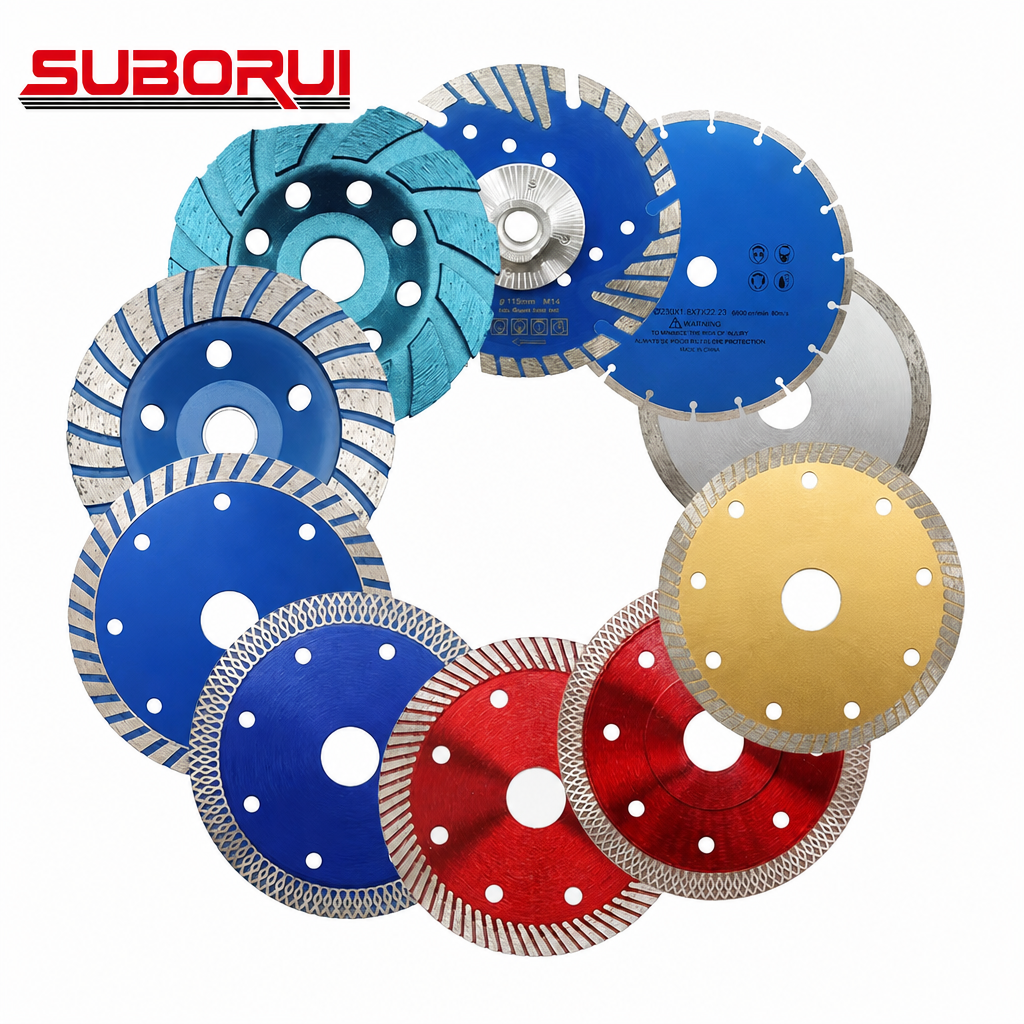
SUBORUI Super Thin Hot Pressed Net Wave Diamond Cutting Marble Ceramic Turbo Saw Blade
- Matrix: Hot-Pressed Sintered
- Rim Style: Reinforced Net Wave
- Application: Porcelain, Granite, Ceramic
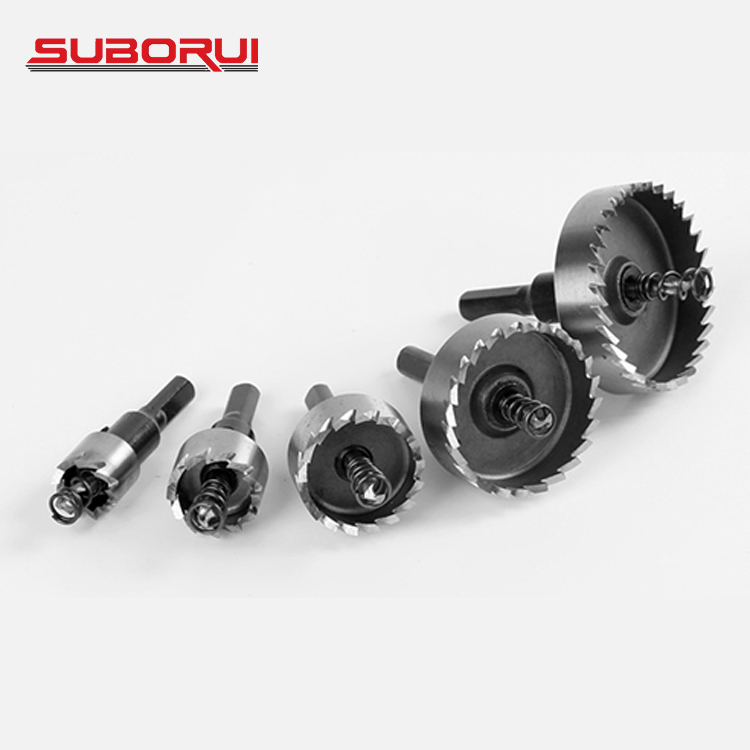
BORUI 12-80MM Hole Saw Drill Bit Set HSS Hole Cutter for Stainless Steel, Metal, Iron
- Diameter Range: 12 mm – 80 mm
- Tooth Geometry: Variable Pitch HSS
- Package: Custom Heavy-Duty Case
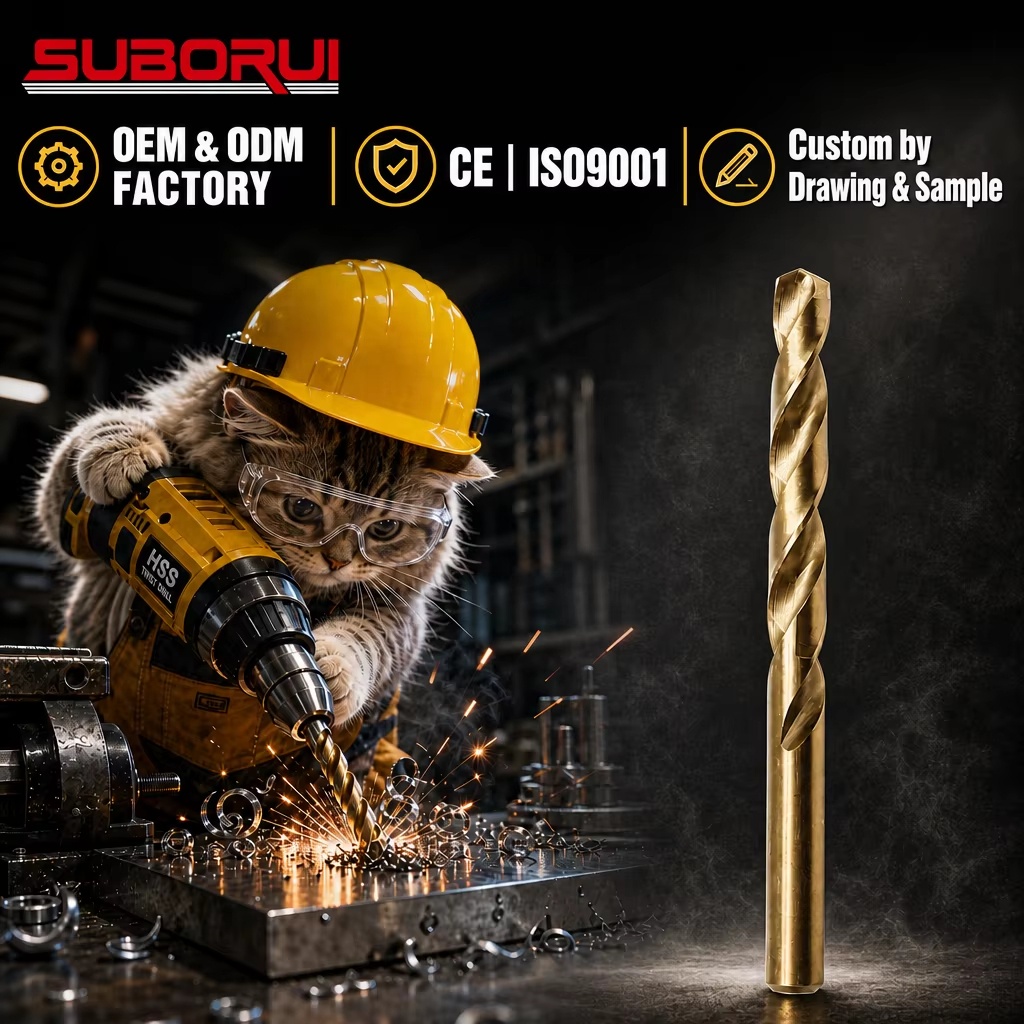
SUBORUI DIN338 135° Split Point M35 Cobalt HSS CNC Spiral Twist Drill Bit
- Standard: DIN338 Fully Ground
- Point Angle: 135° Split Self-Centering
- Hardness: 66–67 HRC (Red Hardness)
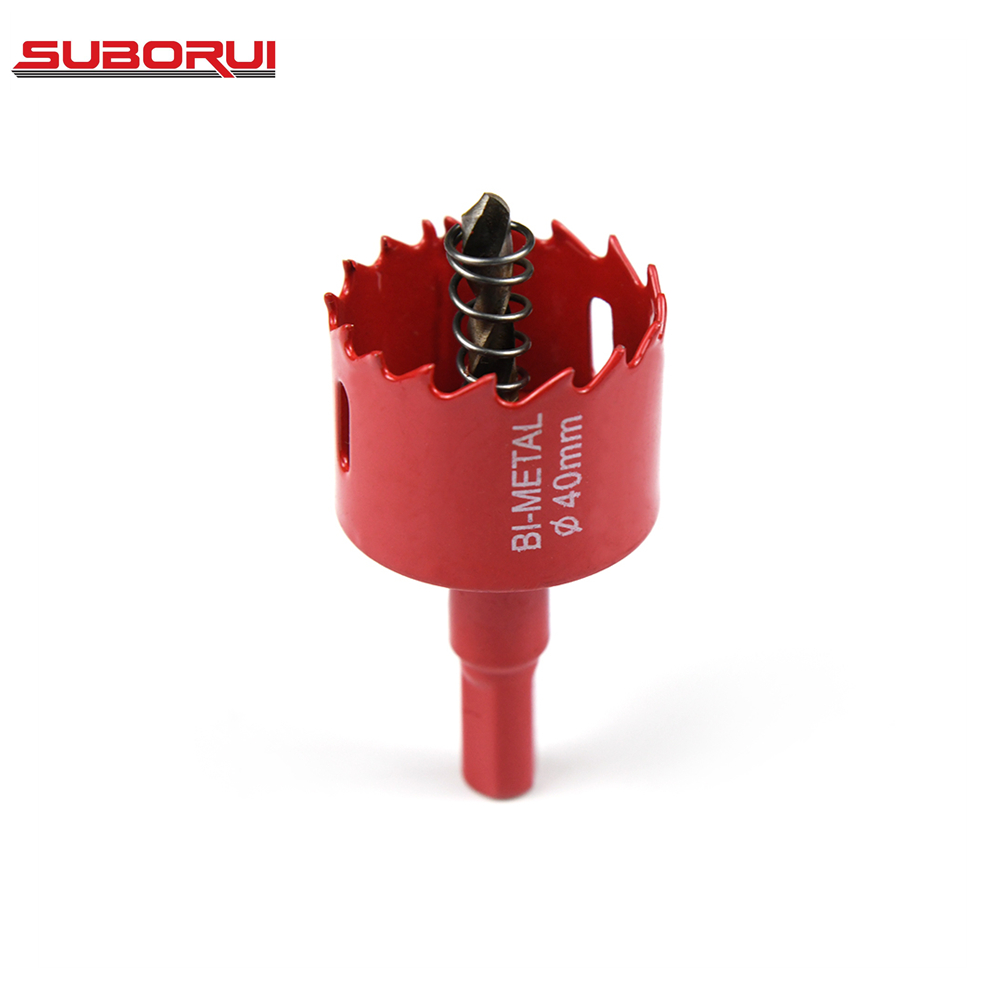
SUBORUI M42 Bi-Metal Drill Bit Cutter Wood Cutting Metal PVC Iron Hole Saws
- Alloy Composition: 8% Cobalt M42 Teeth
- Cut Depth: 38 mm Standard Commercial
- Body Material: Fatigue-Resistant Spring Steel
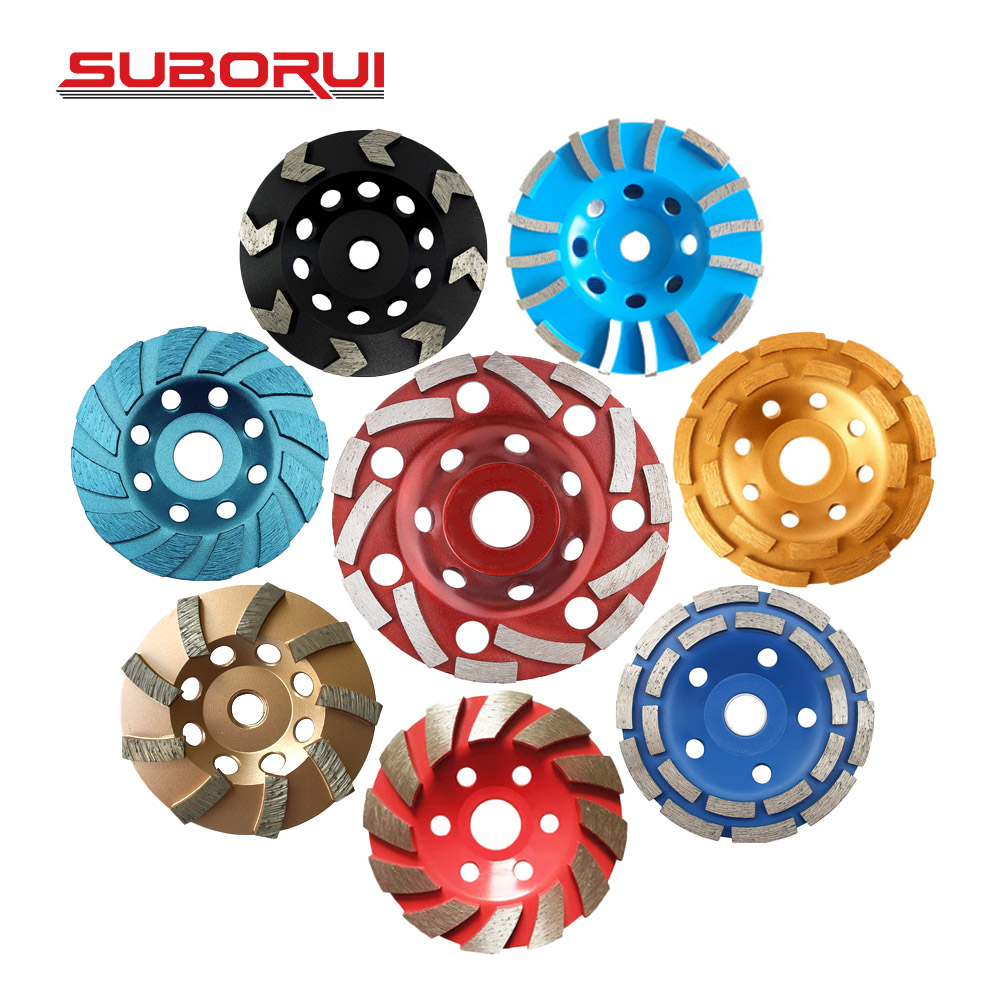
SUBORUI Customised OEM 4.5" Turbo Diamond Cup Wheel for Granite Masonry
- Segment Form: Dynamic Turbo Airflow
- Balancing: Dynamic Balancing <0.05g
- Base Body: Heat-Treated 65Mn Core
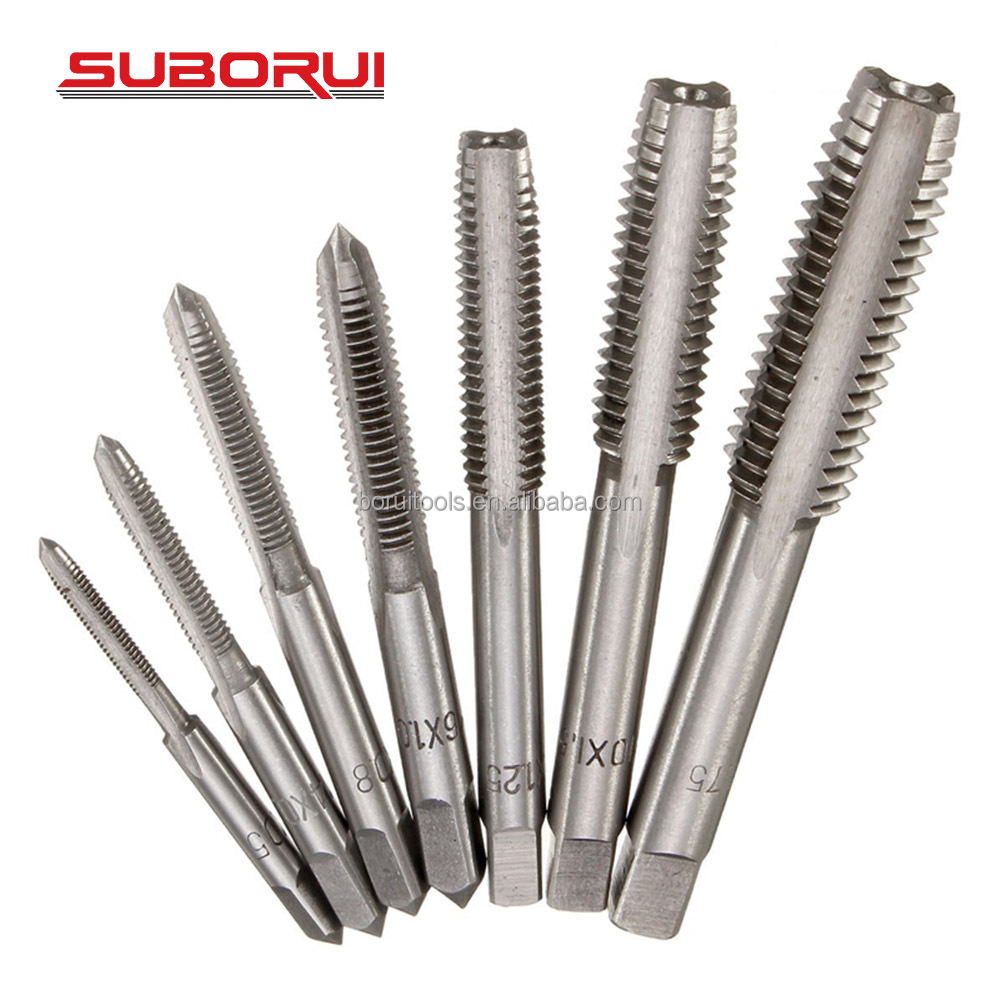
SUBORUI M2-M10 HSS Metric DIN352 Straight Flute Screw Threading Taps Drill Set
- Tolerance: ISO2 / 6H Ground Precision
- Flute Geometry: Chip Evacuation Straight
- Applications: Carbon Steels & Die Casting
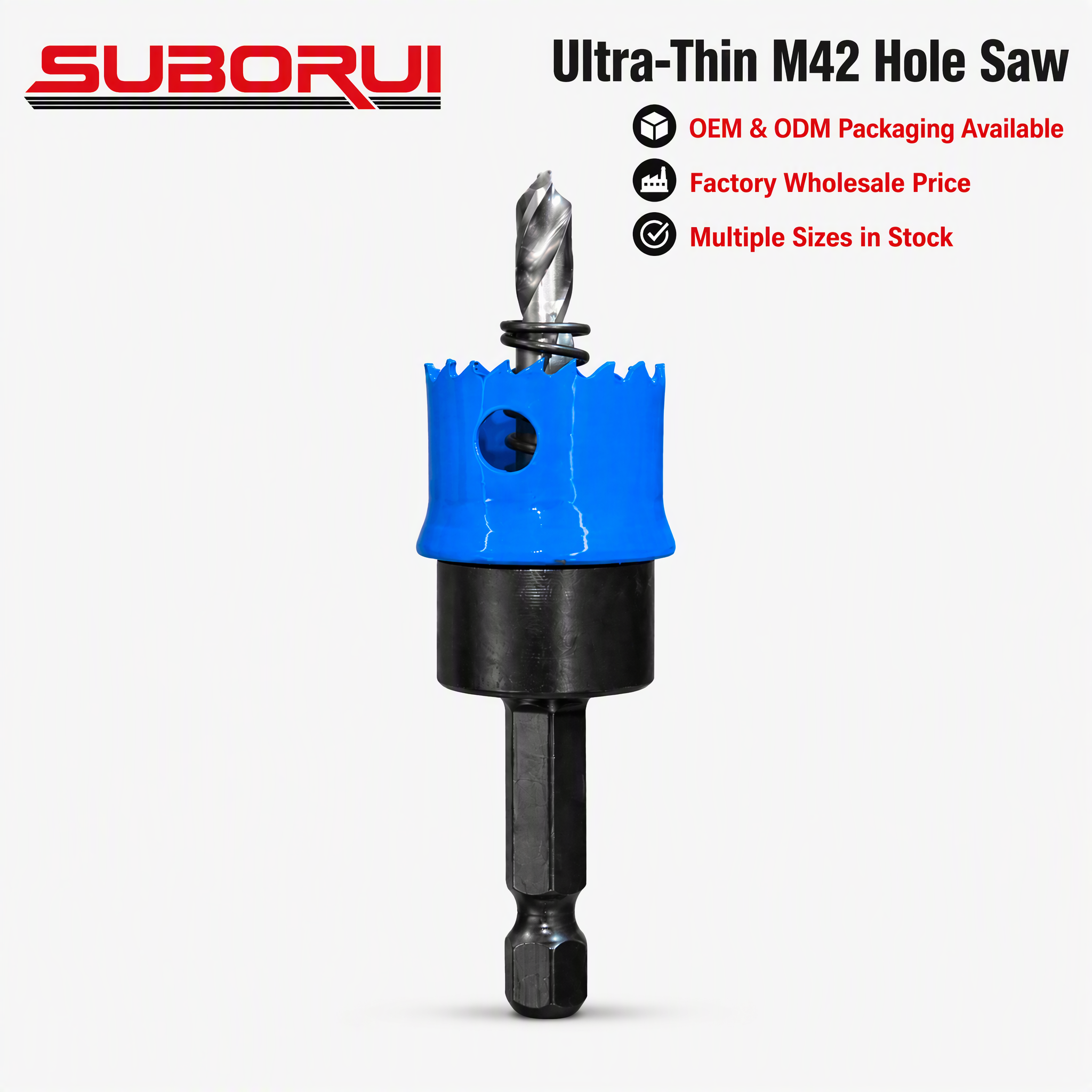
SUBORUI 14-50mm Ultra-thin Hex Shank M42 Bi-Metal Sheet Metal Hole Saw Cutter
- Kerf Thickness: 0.8 mm Thin Profile
- Shank System: 1/4" Impact-Ready Quick Hex
- Feature: Built-in Ejector Spring Mechanism
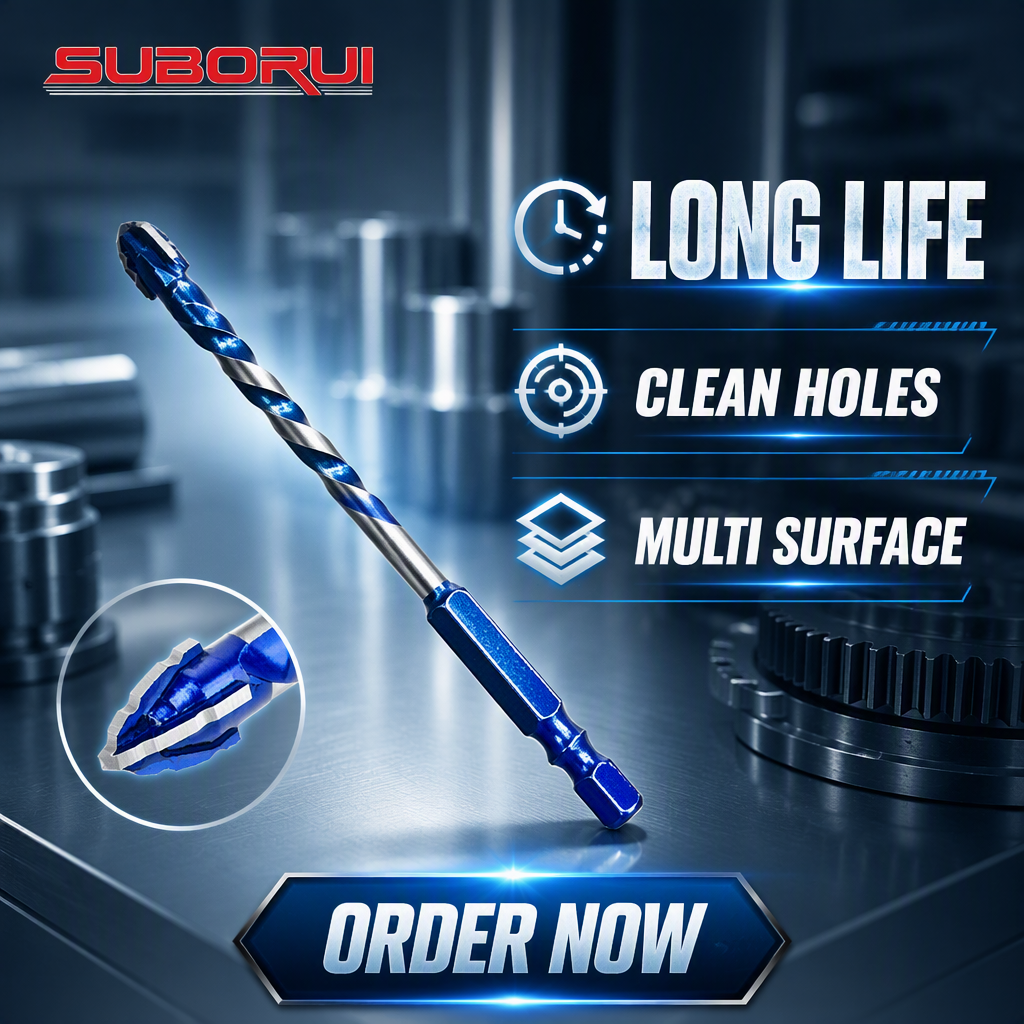
SUBORUI 6-12mm Hex Shank Cross Carbide Tip Glass Masonry Tile Drill Bit
- Carbide Grade: Micro-Grain Tungsten YG8C
- Head Geometry: Self-Centering 4-Cutter Cross
- Substrates: Vitrified Brick, Tile, Mirror
Anatomy of Industrial Segmented Saw Blades
For procurement directors, engineering heads, and private-label brand custodians: how diamond crystal micro-fracturing, cobalt-bronze metal binders, and core tensioning define structural cutting life and operator safety.
1. The Tribology of Diamond Segments: Balancing Bond Hardness and Aggregate Abrasion
A segmented diamond saw blade functions not via shearing or cutting in the traditional woodworking sense, but through controlled micro-grinding and diamond crystal regeneration. High-grade industrial synthetic diamond grits (primarily octahedral mono-crystalline structures synthesized under ultra-high pressure and temperature, 5.5–6.0 GPa) are embedded within a powdered metallurgical bond matrix composed of varying ratios of Cobalt (Co), Nickel (Ni), Bronze (Cu-Sn), Tungsten Carbide (WC), and Iron (Fe).
When sawing abrasive aggregate materials like green concrete or asphalt, highly abrasive sand particles cause rapid erosion of the bond. In these instances, a metallurgically hard, wear-resistant bond matrix (rich in tungsten carbide and cobalt) is engineered to prevent the premature dislodgement (pull-out) of expensive diamond crystals. Conversely, when cutting vitreous, extremely dense materials such as Indian black granite, quartzite, or high-fired vitrified porcelain tile, the bond must be soft and easily erodible (bronze/copper-rich), ensuring that as diamond crystals micro-fracture and dull, the surrounding bond wears away rapidly enough to expose a fresh layer of razor-sharp diamond crystal cutting edges without blade glazing or thermal binding.
| Target Substrate | Mohs Hardness | Recommended Bond Matrix | Diamond Mesh (Grit Size) | Welding Methodology |
|---|---|---|---|---|
| Reinforced Cured Concrete (C30/35) | 6.0 – 7.0 | Medium-Hard (Cobalt-Iron Base) | 35/45 or 40/50 Mesh | Laser Welded (>450 MPa) |
| Abrasive Asphalt & Green Concrete | 4.5 – 5.5 | Ultra-Hard (Tungsten Carbide Reinforced) | 30/40 Coarse Mesh | Laser Welded + Drop Segment |
| Hard Granite & Basalt Stone | 6.5 – 7.5 | Medium-Soft (Cobalt-Bronze Balance) | 40/50 or 50/60 Mesh | Silver Braze / Hot Press |
| Porcelain & Vitrified Slabs | 7.0 – 8.5 | Soft, Rapid-Erosion (Copper/Tin Matrix) | 60/70 or 70/80 Ultra-Fine | Hot-Pressed Sintered Turbo |
2. Segment Retention & Joining Physics: Laser Welding vs. High-Frequency Sintering
For commercial diamond tool wholesalers and OEM vendors supplying road-saw contractors or heavy precast concrete plants, joining integrity is an absolute matter of legal compliance and jobsite safety. Segment separation at linear rim speeds exceeding 80 meters per second creates catastrophic shrapnel hazards. Under the European safety standard EN 13236, diamond saw blades for dry-cutting hand-held saws must withstand minimum segment torsional shear stresses exceeding 350 to 450 N/mm² (MPa).
Jiangsu WRD Tools employs automated 5-axis Nd:YAG and fiber laser welding workstations. Unlike conventional silver-solder brazing—which melts a silver alloy shim at 650°C and softens under intense dry-saw friction—laser welding physically fuses the diamond segment's transition layer directly into the 65Mn / 75Cr1 alloy spring steel core. The resulting deep-penetration weld bead forms a seamless metallurgical bond that does not fail even under temperatures surpassing 900°C, making it mandatory for dry-cutting demolition and rescue saw operations.
3. Steel Core Dynamics: Roll Tensioning, Heat Dissipation, and Gullet Geometries
A high-performance segmented diamond blade relies just as heavily on its underlying steel center as it does on its diamond segments. An improperly leveled or tensioned blade blank will deflect, oscillate, and generate lateral runout when spun up to operational speeds (3,000 to 12,000 RPM depending on blade diameter). We utilize fine-ground 65Mn, 75Cr1, and 50Mn2V alloy steel cores, each heat-treated to 38–42 HRC and subjected to computerized hydraulic roll tensioning. This induces precise internal radial tension zones that counteract centrifugal expansion during operation.
Furthermore, gullet geometry directly influences slurry removal and aerodynamic cooling:
- Keyhole Gullets: The industry standard for reinforced concrete and general masonry. The circular relief root disperses localized mechanical stress concentrations, preventing fatigue cracking down the steel core.
- Wide-U Gullets: Engineered specifically for abrasive green concrete, asphalt, and soft limestone, providing substantial void volume for high-volume abrasive swarf flushing.
- Drop Segments & Undercut Protection: Regularly interspersed segments extending downward past the core perimeter to mechanically intercept abrasive slurry from wearing down the steel core directly underneath the diamond segments.
Future Procurement Trends in Segmented Saw Blades
Strategic supply chain dynamics driving procurement decisions for international cutting tool importers, retail hardware chains, and civil contracting consortia.
Shift from Unit Price to Cost-Per-Linear-Meter (TCO)
Global tier-1 contractors are abandoning low-cost, cold-pressed blades in favor of engineered laser-welded products. Sourcing directors evaluate tooling on a Total Cost of Ownership (TCO) calculation: total meters cut before core exhaustion divided by labor changeover time. High-retention blades reduce equipment downtime by over 40%.
Supply Chain Consolidation in the Danyang Industrial Cluster
B2B buyers are migrating away from fragmented coastal trading companies to vertically integrated manufacturing powerhouses in Danyang, Jiangsu. Direct factory integration delivers end-to-end metallurgical traceability from pure powder batching to laser etching and private-label blister packaging under one audit-verified roof.
Stringent Safety Compliance (oSa & EN 13236 Standard)
With workplace safety enforcement escalating across North America and Europe, retail hardware conglomerates require comprehensive factory-level torque-shear and burst-speed certifications. Factories lacking documented automated ultrasonic and acoustic flaw inspection lines are being disqualified from commercial B2B tender processes.
Technological Evolution in Diamond Tooling
Breakthrough metallurgical formulations, automated manufacturing processes, and geometric design enhancements reshaping industrial concrete and stone sawing productivity.
3D Array / Patterned Diamond Distribution (Arix Technology)
Traditional diamond segments suffer from random diamond grit clustering, causing uneven wear, segment spalling, and wasted diamond volume. Advanced 3D array automation places every single synthetic diamond crystal at mathematically calculated 3-dimensional intervals, ensuring an identical number of working points are always engaging the cut, boosting cutting speeds by 30% to 50%.
Multi-Layer Sandwich & Wave-Profile Segments
By engineering alternating metallurgical layers—where the outer layers contain harder, wear-resistant cobalt alloys and the core layer contains a faster-wearing formulation—segments naturally wear in a concave 'U' shape. This self-dressing profile prevents blade lateral pinch, maintains kerf side clearance, and eliminates manual blade dressing cycles in hard granite and basalt.
Acoustically Dampened Silent Cores with Laser Micro-Slots
Urban noise abatement mandates in urban infrastructure construction have driven rapid adoption of sandwich-steel silent cores. Two sheets of laser-cut 75Cr1 steel encapsulate a thin 0.05 mm copper or viscoelastic polymer vibration damper. Laser micro-cut anti-harmonics expansion slots eliminate operational high-frequency screeching, dropping acoustic output by up to 12 dB(A).
Why Global Tooling Brands Partner with Jiangsu WRD Tools
Established in March 2007 with RMB 10 million registered capital, Jiangsu WRD Tools Co., Ltd. is an Intertek onsite-verified powerhouse situated in Danyang, China's premier cutting-tool manufacturing cluster.
End-to-End Direct Manufacturing Infrastructure
Unlike export intermediaries, Jiangsu WRD Tools maintains total vertical command across its 12,000 square meter advanced industrial manufacturing campus. From raw powder formulation and vacuum hot-pressing sintering furnaces to CNC automated 5-axis laser welding cells, drill flute grinding, automated dynamic balancing, and eco-friendly electroplating lines, our 150+ dedicated specialists ensure every millimeter meets German DIN standards.
- Audited & Credentialed: Premises, production capacity, and automated QC verified onsite by Intertek. Approved as High-Tech Enterprise of Jiangsu Province since 2019.
- Enormous Annual Throughput: Over 90 million units produced annually across drill bits, segmented diamond blades, annular cutters, and hole saws, generating over RMB 80 million in annual turnover.
- Trusted OEM/ODM Legacy: Decades-long track record producing precision tooling components and accessories for global industry icons including BOSCH, Milwaukee, DeWalt, Makita, Irwin, Dexter, KWB, Wolfcraft, Truper, and Heller.
- Comprehensive Private-Label Packaging: Full in-house design and customization for color box graphics, double-blister cards, EVA foam metal cases, laser shank/core etching, and custom RAL color electrophoretic coatings.
Intertek Onsite Audit Summary
Our QA/QC laboratories run comprehensive metallurgical and destructive safety testing protocols on every production batch before maritime clearance:
- Laser Weld Torque-Shear Testing: Verified to exceed 450 MPa under EN 13236 compliance.
- Automated Dynamic Balancing: Lateral runout held under ≤ 0.05 mm, radial runout under ≤ 0.03 mm.
- Rockwell Hardness Validation: Steel cores monitored at 38–42 HRC to eliminate core cracking.
- Spectrometric Powder Verification: X-ray fluorescence analysis for exact cobalt concentration ratios.
Frequently Asked Sourcing Questions (FAQ)
Clear, direct answers regarding production Minimum Order Quantities (MOQ), custom metallurgical formulations, delivery lead times, and private-label packaging support.
Q1: What is the standard production MOQ for custom OEM segmented saw blades?
For standard diameter segmented saw blades (e.g., 115mm, 125mm, 230mm, 350mm) utilizing our proven stock metallurgical formulations, MOQ starts at 100 to 200 pieces per specification. Fully customized proprietary segment geometries, specialized cobalt ratios, or customized laser core cutouts typically require an initial run of 500 pieces.
Q2: How do you formulate segment bonds for regional concrete differences?
Aggregate hardness varies dramatically worldwide: flint aggregates in the UK and Northern Europe require an erodible medium-soft bond, whereas limestone concrete in the US Midwest requires a harder bond. Sourcing teams provide aggregate petrography or compressive strength ratings (e.g., C25, C35, C50), and our metallurgists adjust cobalt and copper concentrations accordingly.
Q3: Can WRD Tools supply complete private-label retail kits?
Yes. More than 70% of our export output is OEM/ODM private-label. We offer laser marking of your brand and safety pictograms on both the steel blade core and segment faces, multi-language barcode printing, anti-counterfeit holographic labels, thermoformed blister packs, and premium full-color retail shelf-ready display cartons.
Q4: How does laser-welded segment safety compare to brazing for dry cutting?
Silver-brazed blades must be operated with wet cooling water to prevent temperatures from exceeding the 650°C brazing alloy melting threshold. For hand-held gas cut-off saws where water suppression is unavailable or restricted, laser-welded segments are legally mandated because the beam fusion withstands operational temperatures over 900°C without mechanical failure.
Q5: What are production lead times for container-volume orders?
Pre-production sample verification and technical drawing sign-offs take 5 to 7 working days. Mass production for standard 20ft/40ft container consignments (approx. 20,000 to 50,000 units) requires 30 to 40 calendar days from formal purchase order deposit. Repeat programmatic replenishment orders are fulfilled on an expedited 20 to 25-day turnaround cycle.
Q6: Which third-party inspection agencies are accepted prior to shipment?
Our facilities maintain open-door audit readiness. In addition to our Intertek onsite factory credentials, clients frequently commission SGS, Bureau Veritas, TÜV Rheinland, or independent third-party QC inspectors to conduct pre-shipment inspections (PSI) covering dimensional tolerance, weld shear strength, runout testing, and packaging integrity.
Connect Directly with Our Diamond Tooling Engineers
Send your substrate specifications, target diamond segment dimensions, arbor configurations, or target competitor benchmarks. Our Danyang export sales team provides full technical proposals, CAD drawings, and FOB/CIF quotations within 24 business hours.