China’s HSS Annular Cutter market has expanded from basic industrial production to highly specialized tooling. Buyers now expect clean holes, stable cutting, and predictable service life. That sounds simple. It is not.
This guide examines ten Chinese manufacturers through practical criteria, including HSS grade, tooth geometry, heat treatment, coating options, shank accuracy, and quality control. It also considers production experience, export capability, customization, and after-sales support. A cutter may look excellent under bright factory lighting, yet fail after several holes in thick structural steel. Real performance matters more than polished catalog language.
Drew Hougen, a longtime annular-cutter industry leader, has expressed a useful principle: “The right cutter should remove material efficiently while keeping the operator in control.” That idea remains relevant when comparing an HSS Annular Cutter supplier. Cutting speed, coolant delivery, machine rigidity, and operator technique can change results significantly. Manufacturer claims need practical verification.
The companies discussed here should not be judged by price alone. A low quotation may hide inconsistent hardness, weak brazing, or limited technical support. Conversely, a higher price does not automatically guarantee superior performance. That is an uncomfortable point.
Where possible, the evaluation should include sample testing, inspection reports, customer feedback, and application-specific trials. Some information may remain difficult to verify publicly. Readers should therefore treat this list as a research starting point, not a final purchasing decision. The best manufacturer is the one that consistently matches cutter design with the actual steel, machine, and workload.
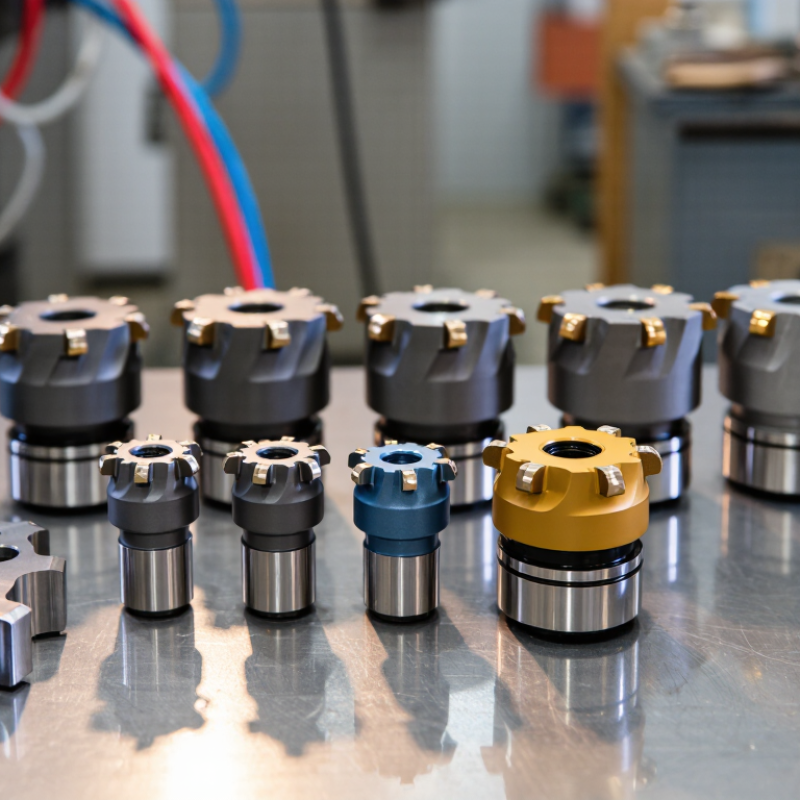
When evaluating China’s top HSS annular cutter manufacturers, buyers should understand the tool itself. An HSS annular cutter is a hollow, toothed drill. Its cutting teeth remove a narrow ring of metal, while the center slug stays mostly intact. A pilot pin aligns the cutter, locates the hole, and helps eject the slug after drilling. The shank transfers torque from a magnetic drill or suitable drill press. Simple structure, but small tolerances matter.
During operation, the teeth cut around the hole rather than across its full diameter. This reduces material removal, cutting noise, and power demand. Cutting fluid carries heat away from the teeth and improves edge life. Feed pressure should remain steady; forcing the cutter can chip teeth or jam the slug. From workshop checks, concentricity, tooth sharpness, shank accuracy, and pilot-pin movement reveal more than packaging. Hardness alone does not guarantee performance.
These cutters suit mild steel, structural sections, stainless steel, and other machinable metals, depending on grade and geometry. Typical jobs include steel plates, frames, bridge components, machinery bases, and pipe work. Thin material needs careful support because the slug may break unevenly. Thick plates require correct speed, lubrication, and chip clearance. A manufacturer may publish impressive drilling numbers, yet field results can differ. Operators should test one cutter, inspect the hole wall, and record tooth wear before larger orders. That extra check feels slow, but it prevents expensive assumptions.
Ranking Chinese HSS annular cutter manufacturers requires more than comparing catalog prices. The key criteria include steel quality, production control, drilling performance, and technical support. Experienced buyers should request material certificates, hardness reports, and batch traceability records. These documents show whether the cutter uses consistent high-speed steel. Small details matter. A reliable manufacturer should explain tooth geometry, cutter wall thickness, and suitable drilling speeds. Test samples should cut clean holes through mild steel, stainless steel, and structural plate without excessive vibration. Independent laboratory testing adds authority, although it may increase purchasing costs.
Factory capability also deserves close inspection. Auditors can check CNC grinding equipment, heat-treatment records, inspection gauges, and operator training. Cutting edges should remain uniform under magnification. Coating quality must be measured, not judged by appearance alone. Production samples should match approved samples in diameter, shank size, and cutting depth. Delivery history, packaging quality, and response times reveal operational reliability. Records reveal reality. A manufacturer that offers application guidance and clear replacement terms shows stronger professional confidence.
No ranking method is perfect. Price can distort the results. A low-cost cutter may create slower drilling and higher labor expenses. Conversely, an expensive product may not suit every machine or material. The most useful ranking combines verified test data, factory evidence, customer feedback, and practical field performance. Some evaluations will remain incomplete, especially when suppliers provide limited information. That weakness should be stated openly.
China’s Top 10 HSS Annular Cutter Manufacturers are often judged by cutting performance, production control, and technical support. The strongest suppliers usually offer HSS cutters in M2 or cobalt-alloy grades. These materials balance toughness, heat resistance, and service life. In workshops, a stable cutter should create a clean hole with limited vibration. That detail matters when drilling structural steel, stainless steel, or thick plates.
A reliable manufacturer normally provides clear dimensions, arbor compatibility, tooth geometry, and recommended cutting speeds. Factory experience also shows through batch testing. Inspectors may check runout, hardness, tooth spacing, and coating adhesion before shipment. Some producers support custom diameters and longer cutters for specialized applications. Packaging deserves attention too. A damaged pilot pin can affect accuracy before the tool reaches the job site.
No ranking is perfect. A company with excellent export records may not provide the best local technical response. Another supplier may offer attractive prices but inconsistent tooth grinding. Buyers should request sample tests, inspection reports, and realistic tool-life data. Claims without cutting conditions are difficult to trust. The top ten should therefore be evaluated through repeated performance, not polished catalogs alone. Even experienced engineers can overlook machine rigidity, lubricant choice, or operator habits. These factors can change results significantly.
Technical reference of commonly offered HSS annular cutter diameters and cutting-depth formats
The chart uses common industrial HSS annular cutter specifications rather than company-level sales or ranking data. The 25 mm and 50 mm cutting-depth formats are widely used for standard and extended-reach applications.
China’s top 10 HSS annular cutter manufacturers should be judged beyond price and catalog size. Product quality begins with controlled HSS grades, such as M2, M35, or M42, matched to the cutting application. Experienced manufacturers can provide hardness data, dimensional reports, runout limits, and batch traceability. These details matter when a cutter must produce clean holes repeatedly on a steel beam.
Certifications also require careful review. ISO 9001 can indicate a managed quality system, but it does not guarantee cutting performance. CE or RoHS documents may support market compliance, depending on the destination and product scope. Ask for current certificates, issuing bodies, and test records. In my experience, practical trials reveal more than polished brochures. Cutter life may change with feed rate, coolant, machine rigidity, and operator technique. That is easy to overlook. Customization should include diameter, cutting depth, shank style, pilot pin design, tooth geometry, coating, labeling, and packaging. A reliable supplier checks drawings, supplies samples, and records approval changes.
Tips: Request a sample batch first. Measure hole size and edge wear. Compare results under identical conditions. Ask whether replacement parts are available. Do not treat the lowest quotation as the lowest total cost. A small mistake in geometry can create vibration, broken teeth, and wasted production time. Even good factories need clear feedback; vague requirements often produce acceptable tools, not excellent ones.
Choosing among China’s top 10 HSS annular cutter manufacturers requires more than comparing prices. Ask how each factory controls steel quality, tooth geometry, heat treatment, and final inspection. A reliable manufacturer should identify the material grade, such as M2, M35, or M42, and provide test records for each production batch.
Request samples in the exact sizes you need. Test a 25 mm cutter on your usual steel plate, not only on an easy demonstration piece. Check cutting speed, hole finish, slug removal, tooth wear, and arbor fit. Measure runout with a dial indicator if possible. Small errors become expensive during continuous drilling. A factory may offer impressive specifications, but practical results can differ.
Inspect the production process through clear photos, video calls, or an independent audit. Confirm whether grinding, coating, inspection, and packing happen under controlled procedures. Traceable labels, stable tolerances, and written corrective actions show stronger professional discipline. Check communication too. Technical questions should receive precise answers, not vague promises. Lead times, minimum order quantities, replacement policies, and export documents should be written into the agreement. The cheapest quote is not always efficient. I would still compare three suppliers, because one overlooked tolerance can change the decision. No checklist is perfect. Allow room for a second sample test before placing a larger order.
| No. | Evaluation Dimension | Practical Benchmark | What to Verify from the Manufacturer | Suggested Weight | Recommended Evidence |
|---|---|---|---|---|---|
| 1 | HSS Material Grade | Clearly specified HSS grade, such as M2 or cobalt-alloyed HSS for higher heat resistance. | Confirm the material designation, chemical composition range, heat-treatment process, and whether the grade is consistent across production batches. | 15% | Material certificate and independent test report |
| 2 | Cutting Diameter Range | A practical range commonly covering approximately 12–100 mm, depending on the application. | Check available metric and inch sizes, size increments, minimum order quantities, and whether non-standard diameters can be produced. | 10% | Current dimensional catalogue |
| 3 | Cutting Depth Options | Common working depths include approximately 25, 35, 55, 75, and 100 mm. | Verify effective cutting depth rather than overall tool length, and confirm whether longer cutters maintain adequate rigidity. | 8% | Technical drawings and sample measurements |
| 4 | Shank Compatibility | Compatibility with the intended magnetic drilling machine, typically through a Weldon-style shank or another declared interface. | Confirm shank diameter, flat dimensions, pilot-pin compatibility, axial length, and fit with the machines used at the installation site. | 12% | Shank drawing and machine compatibility list |
| 5 | Surface Treatment | Options may include bright finish, black oxide, TiN, or other declared coatings, depending on the work material and cutting conditions. | Ask for coating type, coating thickness range, maximum operating temperature, adhesion performance, and whether the coating is applied after final grinding. | 8% | Coating specification and sample inspection |
| 6 | Dimensional Accuracy | The manufacturer should publish measurable tolerances for bore diameter, cutter runout, shank size, and cutting length. | Do not rely only on terms such as “high precision.” Request actual tolerance values and the inspection method used for each critical dimension. | 14% | Inspection report and calibrated measurement records |
| 7 | Cutting Performance | Stable cutting in common structural steels, with controlled burr formation and acceptable tool life under stated conditions. | Compare performance using the same diameter, material, cutting speed, feed, coolant method, and number of holes. Avoid comparing unsupported lifetime claims. | 15% | Controlled sample test and cutting parameters |
| 8 | Quality Management | Documented incoming-material inspection, in-process control, final inspection, and batch traceability. | Verify whether inspection records are linked to batch numbers and whether corrective-action procedures exist for nonconforming tools. | 8% | Quality manual, audit records, and batch documents |
| 9 | Customization Capability | Ability to support private-label packaging, custom dimensions, special shanks, pilot pins, coatings, or customized cutting geometry. | Confirm tooling charges, prototype lead time, minimum order quantity, ownership of drawings, and approval procedures for engineering changes. | 5% | Engineering quotation and approved sample |
| 10 | Export and After-Sales Support | Clear export documentation, protective packaging, predictable lead times, and defined procedures for complaints or replacement claims. | Evaluate response time, product labeling, carton protection, commercial terms, warranty conditions, and the availability of technical cutting guidance. | 5% | Sample export documents and service terms |
It is a hollow, toothed drill for cutting metal. Its teeth remove a narrow ring. The center slug stays mostly intact.
The pilot pin aligns the cutter and locates the hole. It also helps eject the center slug. Keep it moving freely.
It cuts around the hole instead of removing the full diameter. This reduces material removal, noise, and power demand. Less effort helps.
They suit mild steel, structural steel, stainless steel, and other machinable metals. The grade and tooth geometry affect performance.
Check cutter sharpness, concentricity, shank accuracy, and pilot-pin movement. Confirm the machine is rigid enough. Small errors matter.
Cutting fluid carries heat away and can extend tooth life. Apply steady feed pressure. Excessive force may chip teeth or jam the slug.
Request material certificates, hardness reports, and batch traceability records. Ask about tooth geometry, wall thickness, speeds, and arbor compatibility. Paperwork helps, but it is not proof alone.
Test samples in mild steel, stainless steel, and structural plate. Record hole quality, vibration, cutting time, and tooth wear. The method is not flawless. Machine condition and operator habits can change results.
This article presents a practical overview of China’s top 10 HSS Annular Cutter manufacturers, focusing on the structure, working principles, and major applications of HSS Annular Cutter products in metal fabrication, construction, machinery, and industrial maintenance. It explains how annular cutters create precise holes efficiently while reducing material waste, and introduces the key criteria used to evaluate manufacturers, including cutting performance, material quality, production capacity, technical expertise, delivery reliability, and customer support.
The comparison also examines product quality, certification systems, inspection procedures, and customization capabilities, helping buyers understand how manufacturers meet different tooling requirements. Finally, the article provides guidance on selecting a suitable Chinese supplier by considering application conditions, cutter dimensions, material compatibility, order volume, quality control, communication, and after-sales service. This information is designed to support informed sourcing decisions without focusing on any specific brand.