Onsite-verified manufacturer by Intertek Danyang, Jiangsu, China
0%

China’s SDS Max rotary drill bit manufacturers serve construction, renovation, and infrastructure work where large rotary hammers face demanding materials. Choosing a supplier takes more than comparing catalogue prices. Buyers should examine carbide-tip design, steel quality, welding consistency, and the bit’s performance in concrete and reinforced concrete. Ask for product specifications and test details. A clean catalogue photo is not proof of reliable production.

The SDS Max Rotary Drill Bit must transfer impact energy while clearing dust through its flutes. Small differences matter. A worn tip, uneven brazing, or poor alignment can slow drilling and increase operator effort. Compare sample batches, not just one polished display piece. Check stated dimensions, compatibility, packaging, and quality-control procedures. These details help distinguish experienced manufacturers from traders with limited production oversight.

I can’t responsibly attribute a quotation to a named industry expert without a verifiable source. A useful editorial principle is: “Judge the bit by repeatable performance, not by its label alone.” This is an original summary, not a sourced expert quotation. It also leaves room for reflection: no single test captures every jobsite condition. Concrete hardness, aggregate, hammer settings, and operator technique all affect results. A careful supplier comparison should therefore combine technical evidence with practical trials.
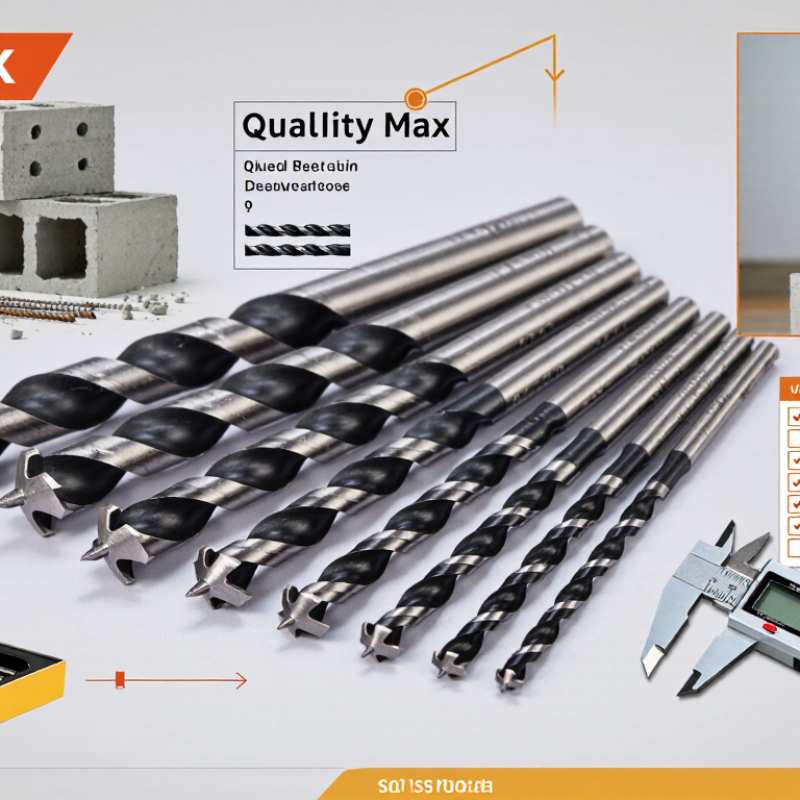
China Top SDS Max Rotary Drill Bit Manufacturers

SDS-Max Rotary Drill Bits: Design and Operating Principles

SDS-Max Rotary Drill Bits: Design and Operating Principles

An SDS-Max bit is built to handle demanding rotary-hammer work in concrete and masonry. Its thick shank has open drive slots and retaining grooves. These engage the tool’s chuck, allowing the bit to move back and forth while receiving rotational force. A carbide cutting head breaks material into small fragments. Spiral flutes carry debris away from the hole. Simple in outline, but the details matter: worn cutting edges can slow drilling and increase heat.

Tips: Match the bit diameter and length to the tool and task. Keep the bit straight, and let the hammer action do the work. Pull it back periodically to clear dust. Stop and inspect it if the tip chips or the shank looks damaged.

In operation, the motor turns the bit as the hammer mechanism delivers repeated axial impacts. The cutting head fractures the surface; the flutes help move dust out of the bore. Excessive pushing may not improve progress. It can strain the tool or bind the bit. Use suitable dust extraction and follow the tool maker’s operating instructions. In real work, dust and hard aggregate can make drilling less predictable than the clean diagrams suggest. That part is easy to underestimate.

SDS-Max Rotary Drill Bits: Design and Operating Principles

SDS-Max shank groove functions

An SDS-Max shank has a nominal diameter of 18 mm. Its three open grooves transmit rotation from the tool, while two closed grooves engage the retention mechanism. In hammer-drilling mode, the bit can move axially as the tool delivers impact energy.

Materials, Manufacturing Processes, and Quality Standards

China Top SDS Max Rotary Drill Bit Manufacturers: Materials, Manufacturing Processes, and Quality Standards

SDS-Max rotary drill bits combine a tough alloy-steel body with a tungsten-carbide cutting head. Carbide grade, grain size, and brazing quality affect edge retention under repeated impact. The USGS Mineral Commodity Summaries 2024 reports global tungsten mine output of about 78,000 tonnes in 2023, including 63,000 tonnes from China. This supply context matters, but origin alone does not prove consistent carbide quality. Request material certificates and batch traceability.

Manufacturing commonly includes steel preparation, shank machining, heat treatment, flute grinding, carbide brazing, and final inspection. Small errors can make a bit wander or chip. Check shank dimensions, concentricity, hardness, and braze integrity against documented limits. ISO 9001:2015 supports quality-management processes, while ISO 6508-1 specifies Rockwell hardness testing for metallic materials. Neither standard alone certifies drilling performance. Ask suppliers to explain their impact-test method; that detail is sometimes missing.

Tips: Request a recent inspection record. Examine the brazed joint closely. Compare runout before and after impact testing. One test is not enough.

Common Applications Across Construction and Mining

In construction, SDS-Max rotary hammer bits are commonly used for deep holes in concrete and masonry. Crews drill for anchor bolts, rebar connections, pipe sleeves, and cable routes. The work is tangible: dust collects around a floor opening, while a worn carbide tip may slow progress noticeably. The USGS Mineral Commodity Summaries 2025 estimates U.S. cement production at about 90 million metric tons in 2024. That figure shows the scale of concrete use; it does not measure demand for any particular drill bit.

Mining and tunneling call for a narrower role. SDS-Max bits can make smaller holes in rock or concrete for support hardware, mesh attachments, and service installations, when the hammer and bit suit the material. They are not production-drilling tools for large mine headings. A practical check matters: fractured rock can deflect a bit, and excessive pressure may overheat it or damage the hammer. The USGS Mineral Commodity Summaries 2025 estimates 2024 global copper mine production at 23 million metric tons, reflecting the scale of mining activity, not SDS-Max use. Conditions vary underground. Field choices still need judgment.

China’s SDS-Max Drill Bit Manufacturing Landscape

China Top SDS Max Rotary Drill Bit Manufacturers

China’s SDS-Max Drill Bit Manufacturing Landscape

China’s SDS-Max drill bit manufacturing landscape includes specialist workshops and larger tool factories. Many are located near established steel-processing and machinery supply networks. This proximity can support steady sourcing of alloy steel, heat treatment, and machining services. Production methods vary, though. Some factories emphasize automated grinding, while others rely more heavily on skilled operators for finishing and inspection. Small details matter.

For buyers, manufacturing capacity alone says little about field performance. Ask how the maker controls shank dimensions, flute geometry, brazing, and heat treatment. These details affect fit, cutting stability, and resistance to wear in concrete and masonry. Sample testing can reveal issues that a specification sheet may miss, such as uneven tip wear or vibration during drilling. Still, one sample cannot represent every production batch. That is worth remembering.

Tips: Check dimensional reports and material records, then test several bits in comparable conditions. Look for straight flutes, secure carbide tips, and consistent shank measurements. Discuss batch inspection and packaging before ordering. If answers are vague, pause and ask again. A clear process matters more than polished product photos.

How to Evaluate Chinese SDS-Max Drill Bit Manufacturers

China Top SDS Max Rotary Drill Bit Manufacturers

How to Evaluate Chinese SDS-Max Drill Bit Manufacturers

China’s manufacturing scale is substantial: UNIDO’s International Yearbook of Industrial Statistics 2024 estimates it produced about 31% of global manufacturing value added in 2022. That figure signals capacity, not consistent bit quality. When evaluating a supplier, ask for batch-level inspection records, steel specifications, heat-treatment controls, and runout measurements. For a sample, check that the SDS-Max shank locks securely and the carbide tip sits evenly. Then drill comparable concrete with the same hammer, bit diameter, and depth. Record drilling time, vibration, and wear. Small differences can matter.

Tips: Request test results from recent production, not only a polished sample. Ask how the factory tracks failed batches and corrective actions. Compare stated tolerances with measured samples. A certificate alone is not proof of performance. One point is easy to miss: test consistency across several bits, not just one. If results vary, ask for an explanation—and verify it with another batch.

China Top SDS Max Rotary Drill Bit Manufacturers - How to Evaluate Chinese SDS-Max Drill Bit Manufacturers
Evaluation Dimension Weight What to Verify Evidence to Request Scoring Guidance (1–5)
SDS-Max Compatibility 15% Whether the bit shank is designed for SDS-Max holders and locks and releases correctly in compatible tools. Shank drawings, product specifications, and a fit check using a compatible SDS-Max tool or holder. 1: No supporting specifications; 3: drawings and sample fit check available; 5: documented specifications plus repeatable fit-check records.
Materials and Heat Treatment 15% Material identification and control of heat treatment for the body and cutting components, where applicable. Material certificates or test reports, heat-treatment records, and hardness test results with test locations identified. 1: No traceable records; 3: records supplied for samples or batches; 5: documented controls and traceable batch-level results.
Drilling Performance and Durability 15% Performance in the intended substrate, including drilling rate, wear, and resistance to damage under defined test conditions. Comparative test reports stating tool model, bit diameter and length, substrate, operating conditions, sample count, and test method. 1: No repeatable test data; 3: results available for one defined setup; 5: repeatable comparative results across relevant sizes or conditions.
Dimensional Quality Control 15% Control of critical dimensions, straightness, concentricity or runout, and consistency between production lots. Inspection plans, measurement records, gauge calibration records, and sample inspection reports against agreed drawings. 1: No inspection records; 3: routine checks documented; 5: critical characteristics, measurement methods, and lot records clearly controlled.
Production Traceability 10% Ability to link finished products to production batches and relevant material or inspection records. Sample labels, batch codes, production travelers, and an example of a batch record retrieval process. 1: No batch identification; 3: batch codes used with partial records; 5: finished goods can be linked to relevant production and inspection records.
Quality Management 10% Documented procedures for incoming inspection, production checks, nonconforming products, and corrective actions. Quality-system certificate, if claimed, with its scope and validity checked; inspection procedures and sample corrective-action records. 1: No documented process; 3: basic procedures available; 5: documented controls supported by current records and independently verifiable certificates where applicable.
Product Range and Customization 8% Availability of required diameters, working lengths, overall lengths, head designs, and packaging options. Current product catalogue, technical drawings, sample availability, and written confirmation of customization limits. 1: Required specifications unavailable; 3: most requirements covered; 5: specifications are clearly documented and samples or customization plans are confirmed.
Lead Time and Delivery Reliability 7% Quoted production lead time, order capacity, packaging readiness, and consistency of shipment performance. Written production schedule, capacity assumptions, packaging details, and shipment history or reference data where available. 1: No clear schedule; 3: lead time and capacity stated; 5: documented planning and verifiable delivery-performance records provided.
Communication and After-Sales Support 5% Responsiveness to technical questions, complaint handling, and clarity of warranty or replacement terms. Written support process, response-time commitment, warranty terms, and a sample complaint-resolution record. 1: Terms unclear; 3: basic support terms documented; 5: clear response, investigation, and resolution procedures provided.
Total 100% Weighted score = Σ (criterion score ÷ 5 × criterion weight). Verify claims using samples, records, and agreed acceptance criteria before placing an order.

FAQS

What is an SDS-Max rotary drill bit designed for?

It is made for demanding rotary-hammer drilling in concrete and masonry.

How does the bit stay connected to the tool?

Its thick shank has drive slots and retaining grooves that engage the chuck.

What do the cutting head and flutes do?

The carbide head breaks material into fragments. Spiral flutes help carry dust out of the hole.

How should I use the bit while drilling?

Keep it straight and let the hammer action work. Excessive pressure can strain the tool or bind the bit.

When should I pull the bit back or stop?

Pull it back periodically to clear dust. Stop and inspect it if the tip chips or the shank looks damaged.

What should buyers check when assessing bit quality?

Check shank dimensions, flute geometry, carbide-tip attachment, and heat-treatment records. Small details matter.

Can one sample confirm a factory’s production quality?

No. Test several bits under comparable conditions. One sample cannot represent every batch.

What can make drilling results less predictable?

Dust and hard aggregate can affect progress. A tidy diagram does not show every rough patch.

Conclusion

This article explains how an SDS Max Rotary Drill Bit works, from its shank and cutting head to the impact mechanism that transfers force into hard materials. It also reviews the steels and carbide materials commonly used in bit production, along with manufacturing steps such as heat treatment, precision machining, and inspection. Consistent dimensions, material strength, and quality testing help determine whether a bit can deliver reliable performance over repeated use.

The article also covers applications in construction and mining, where drilling needs vary by material, hole size, and operating conditions. It outlines China’s manufacturing landscape and offers practical criteria for evaluating suppliers, including production capability, quality-control procedures, technical documentation, customization options, and communication. These factors can help buyers compare manufacturers and select drill bits suited to their equipment and project requirements.

Alexander

Alexander

Alexander is a professional marketing specialist with a strong understanding of product strategy, customer needs, and market development. As a key contributor to our company, he combines practical marketing experience with in-depth knowledge of our products, helping customers clearly understand......